· by Michael Blair, Nashville's Water Damage
Two houses with the same amount of water on the floor can get very different restoration scopes and very different bills. The reason is category, which describes how contaminated the water is. It determines what can be dried and kept and what has to be removed, and it changes with time.
The three categories
Category one is water from a sanitary source: a supply line, a water heater, an overflowing tub of clean water. It poses no substantial health risk on arrival, and materials it has wet can usually be dried in place if the response is fast.
Category two, often called gray water, carries significant contamination: a washing machine or dishwasher discharge, a toilet overflow containing urine but no solids, water from a waterbed or an aquarium. Category three, black water, is grossly contaminated: sewage, a backed-up sewer lateral, ground surface water from flooding, or any water carrying pathogens.
Can clean water damage turn into contaminated water?
Category one water does not stay category one. Once it has sat in contact with building materials, soil and whatever is on the floor, it picks up contamination and nutrients, and in Middle Tennessee warmth and humidity it can degrade to category two within a day or two.
That is the single strongest argument for calling someone the same day rather than seeing whether it dries. The clean supply line leak that gets attention in hour four is a drying job. The same leak found on day three is a demolition job, and the difference is category.
How does the category change the restoration work?
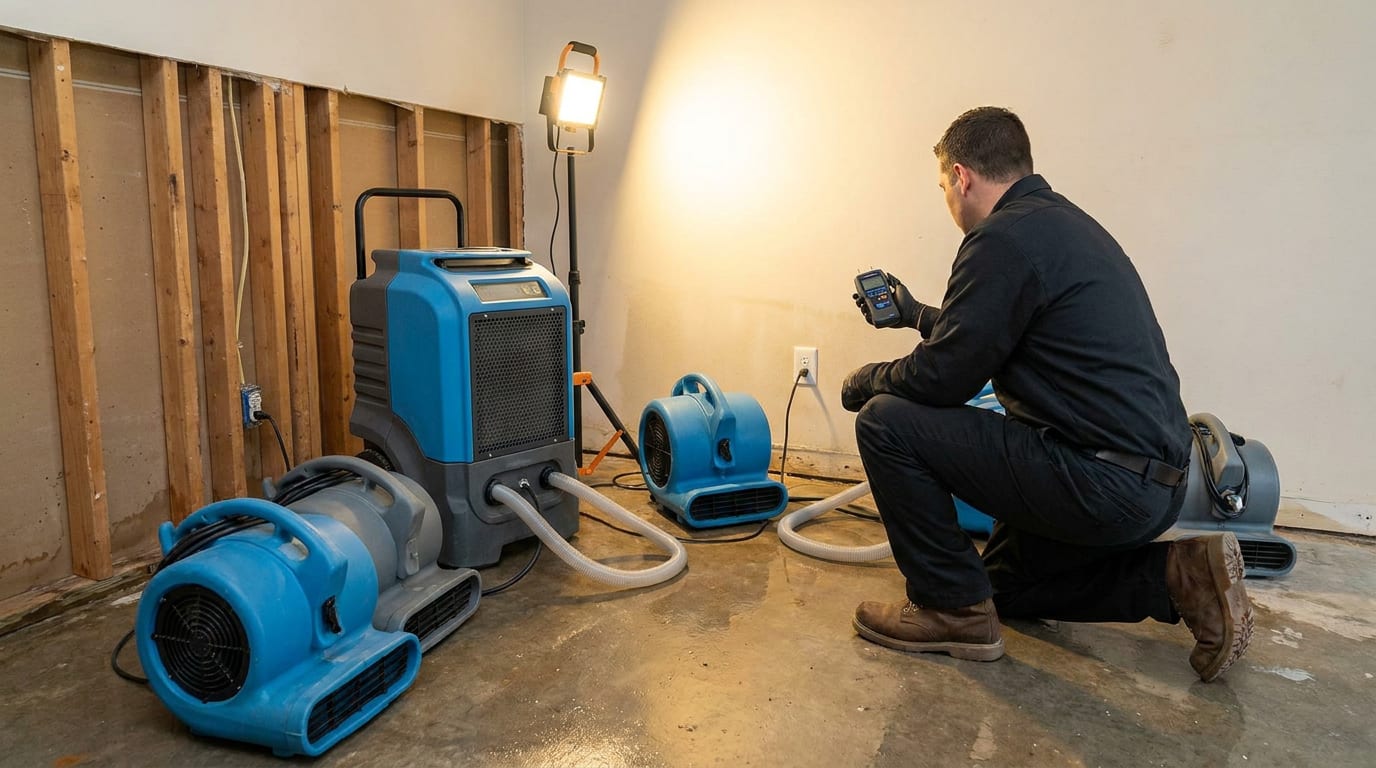
Category one usually means extraction, air movers and dehumidifiers, with carpet and pad often salvageable and drywall frequently dried in place. Category two typically means the pad goes, carpet may or may not be salvageable, and porous materials are assessed individually.
Category three means porous materials go, without much debate: carpet, pad, insulation, and drywall generally cut back above the water line. The area is contained and treated as a contaminated work area, and that is why a sewer backup costs a multiple of a supply line leak of the same size.
- Category one: sanitary source, most materials dryable in place
- Category two: significant contamination, porous materials at risk
- Category three: grossly contaminated, porous materials removed
- Any category degrades over time, faster in Tennessee humidity
- Standing water in a crawl space is generally treated as category three
How it interacts with your claim
Insurers deal with category language routinely, and a restoration company documenting the category, the moisture readings and the drying log is producing the record the adjuster needs. That documentation is what supports the scope when it is questioned later.
The cause still governs coverage separately. A sudden burst supply line is typically covered while a long-running seep typically is not, and sewer backup is commonly excluded unless a specific endorsement was purchased. Worth knowing which of those you have before you need it, since it is an inexpensive addition to most policies.
FAQ
Clean, Gray and Black Water After a Loss — questions
Can category three water damage be dried rather than removed?
Structural materials such as framing and subfloor can often be cleaned, treated and dried. Porous materials that absorbed the water, including carpet pad, insulation and typically the drywall, are removed rather than dried, because they cannot be reliably decontaminated and the contamination is the problem rather than the moisture.
Is water from a crawl space category three?
Usually treated as such. Ground water carries soil organisms, and a Nashville crawl space frequently has rodent and insect activity in it, so restoration protocols treat standing water there as contaminated. It is also the reason crawl space water is worth taking seriously rather than waiting for it to recede.
How fast does clean water become contaminated?
Within a day or two under normal indoor conditions, and faster in the heat and humidity of a Middle Tennessee summer. Microbial growth needs moisture, a food source and time, and wet building materials supply the first two immediately. Response time is the main variable a homeowner actually controls.
What is the difference between gray water and black water?
Gray water, category two, carries significant contamination, such as washer or dishwasher discharge or a toilet overflow with urine but no solids. Black water, category three, is grossly contaminated: sewage, a backed-up sewer lateral or floodwater from outside. Gray water puts porous materials at risk, while black water means they are removed.