
· by Michael Blair, Nashville's Water Damage
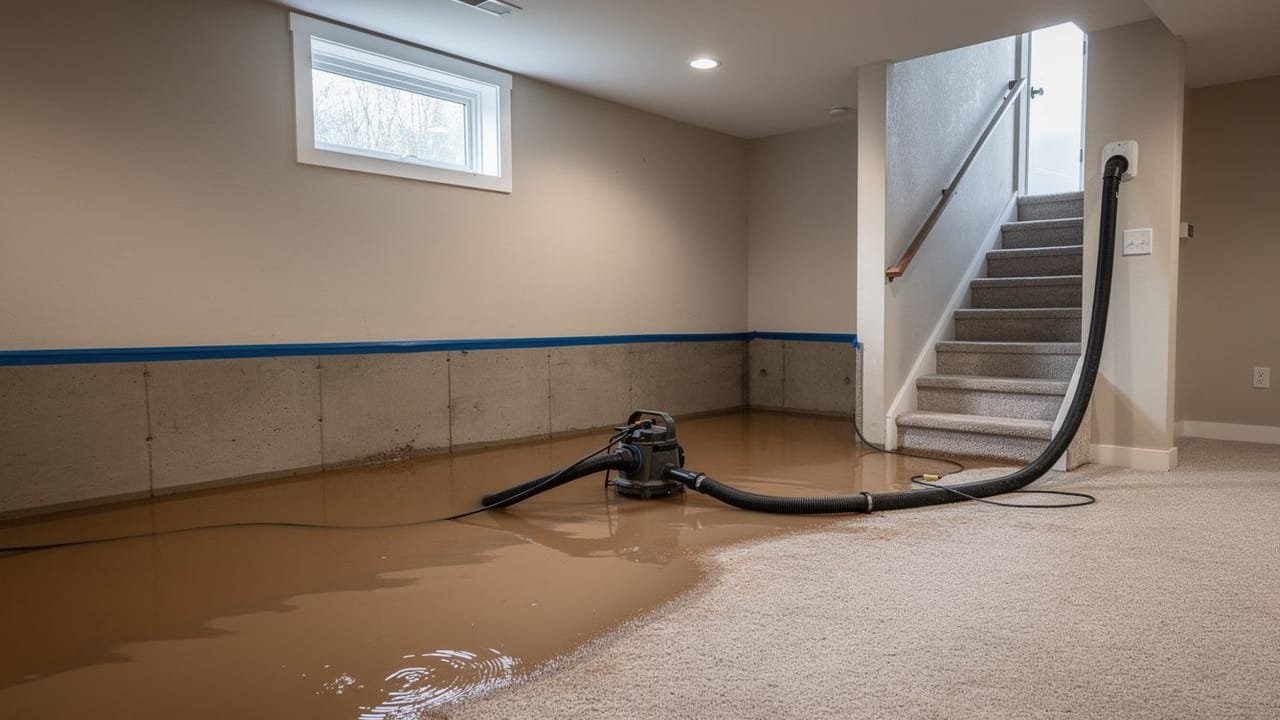
After a hard storm, the instinct with a flooded basement is to get every drop out as fast as possible. That instinct is right about the carpet and the drywall and wrong about the foundation. The ground around the house is soaked too, and for a while the water inside is all that pushes back against it. Here is how a basement gets emptied safely, in the order it has to happen, and where our emergency water extraction fits in.
Is it safe to walk into a flooded basement?
Not until the power to the house is off. Ready.gov’s flood safety guidance warns against touching wet electrical equipment or standing in water while it may be live, and says to turn the electricity off only if you can do it safely. A basement holds every kind of electrical hazard at once: outlets near the floor, a freezer or a dehumidifier plugged in, an extension cord under the water, and often the breaker panel itself.
If the panel is in the basement and reaching it means stepping into the water, that is not safe, and the answer is to stay on the stairs. Our crews do not wade in either until the power is confirmed off. University of Missouri Extension’s guide to removing water from flooded basements adds the gas: shut it off, open the doors and windows, and walk the outside of the house looking for cave-ins or cracked foundation walls before you go down.
Then treat the water as dirty. Ready.gov notes that floodwater can be contaminated, and storm water that came in through a wall or a floor drain has crossed yards, streets and sewer lines on its way. That puts it at the far end of the scale described in our post on clean, gray and black water, which changes what can be kept once it is out.
Why can’t a flooded basement be pumped out all at once?
Because the water inside the basement is holding the walls up. Missouri Extension explains that after a flood the soil around the foundation is saturated and pushes inward, and the water in the basement pushes back; pump it all out quickly and the outside pressure can crack or rupture the walls or the floor. Their guidance is plain: pump in stages, since removing everything at once can do serious structural damage.
That guidance comes from a Missouri university, but the physics is not regional. It applies anywhere the ground around a basement is full of water, and a Middle Tennessee storm does that. The National Weather Service’s account of the May 2010 flood records 13.57 inches at Nashville International over two days, more than double the previous two-day record of 6.68 inches. A storm a fraction of that size still leaves the ground wet for days after the rain ends.
A cracked foundation wall turns a water job into a structural one, which is a far bigger repair than anything the flood itself did to the room. Waiting a day between stages costs a little drying time. Skipping the wait can cost the wall.
How do you pump out a basement in stages?
Missouri Extension lays out the method, and it starts with the pump. Do not run an electric pump off the house’s own wiring; use a gas pump set outside the house with its hose run down into the basement, or a pump on an outside line. Our water extraction crews pump the same way, a foot at a time, with gas pumps set outside the house. The steps:
- Mark the water level on the wall.
- Pump out about one foot, then mark the new level.
- Wait overnight. If the water has risen back above the first mark, it is too early; wait 24 hours and pump down another foot.
- Once the level stops coming back, pump out two to three feet and wait overnight again.
- Repeat each day until the basement is empty.
What happens once the water is out
Call your insurer before pumping starts, not after. Missouri Extension notes the company may want to inspect the basement and give its own guidance first, and photos of the water at its highest mark help either way. Our insurance coordination work is built around documenting the loss in the terms an adjuster reads.
With the floor clear, the porous materials come next. The EPA’s mold cleanup guidance says absorbent materials such as carpet and ceiling tiles may have to be thrown away if they become moldy, because the mold can be hard or impossible to remove from them completely. In a finished basement that soaked in storm water, that usually means the carpet, the pad and the bottom of the drywall. What stays gets structural drying, with meter readings taken until the framing and the slab match a dry part of the house.
Ready.gov points to two things that make the next storm smaller: check valves on the drain lines, so water cannot come back up through them, and a sump pump with a battery backup, since storms that flood basements often take the power with them. Metro Water Services also lets you look up your property’s flood hazard through its stormwater page. If the basement under your Brentwood house or anywhere else in Middle Tennessee has water in it now, keep the power off and ask us for a free estimate.
Sources
- University of Missouri Extension: Removing Water From Flooded Basements — Shut off electricity and gas, check outside walls, call the insurer first; no electric pump on house power; pump in stages because the water inside braces the walls against saturated soil; the foot-at-a-time method.
- Ready.gov (FEMA): Floods — Electrocution risk from wet electrical equipment and standing water; turn off power only if safe; floodwater can be contaminated; check valves and battery-backed sump pumps.
- National Weather Service Nashville: May 2010 Flood — 13.57 inches over two days at Nashville International against a previous two-day record of 6.68 inches.
- U.S. EPA: Mold Cleanup in Your Home — Absorbent materials such as carpet and ceiling tiles may have to be thrown away if moldy.
- Metro Water Services, Metro Nashville: Stormwater — Flood hazard and floodplain inquiry tools for property owners.
FAQ
Pumping Out a Flooded Basement Without Cracking It — questions
Can I use an electric pump in a flooded basement?
Not one plugged into the house. University of Missouri Extension advises against any electric pump powered by the home’s own electrical system. Use a gas-powered pump that sits outside the house with its hose run into the basement, or a pump connected to an outside line, and keep the house power off while it runs.
How long should I wait between pumping stages?
Overnight at least. After pumping a foot, mark the level and check it the next morning. If the water rose back over the earlier mark, the ground outside is still saturated, so wait another 24 hours before the next foot. Once it holds, you can take two to three feet at a time, a day apart.
Should I call my insurance company before pumping out a basement?
Yes, if you can reach them first. Missouri Extension notes the insurer may want to inspect the basement and give guidance before the water comes out. Take photos and mark the high water line on the wall either way, because once the basement is pumped dry that evidence is gone.
What happens to carpet in a flooded basement?
In most storm floods it goes. The EPA says absorbent materials such as carpet may have to be thrown away if they become moldy, because mold can be hard or impossible to clean out of them, and storm water carries contamination into the pad. We cut and remove it early so the floor beneath can dry.
Is it safe to walk into a flooded basement?
Only after the electricity is off. Ready.gov warns that standing in water around wet electrical equipment risks electrocution, and a basement often holds the breaker panel, outlets near the floor and plugged-in appliances. If reaching the panel means stepping into the water, stay out and leave it to someone who can cut power safely.