
· by Michael Blair, Nashville's Water Damage
When a supply line splits during a cold snap, the search people type is some version of emergency water removal, and the removal is real work. The hour before anyone arrives decides how big that work gets, though. A pipe that froze overnight often lets go as it thaws, in a crawl space, an attic run or an exterior wall, and it runs until someone closes a valve. This is that hour for a burst line in a Middle Tennessee house, and the point where our emergency water extraction takes over from you.
Closing a valve you may never have touched
Metro Water Services’ cold-weather plumbing advice for property owners puts one step first when a pipe bursts: shut off the water at the valve to limit the damage. The EPA’s page on winter weather and indoor air quality gives the same instruction. Knowing that is easy. Finding the valve with water on the floor is the hard part.
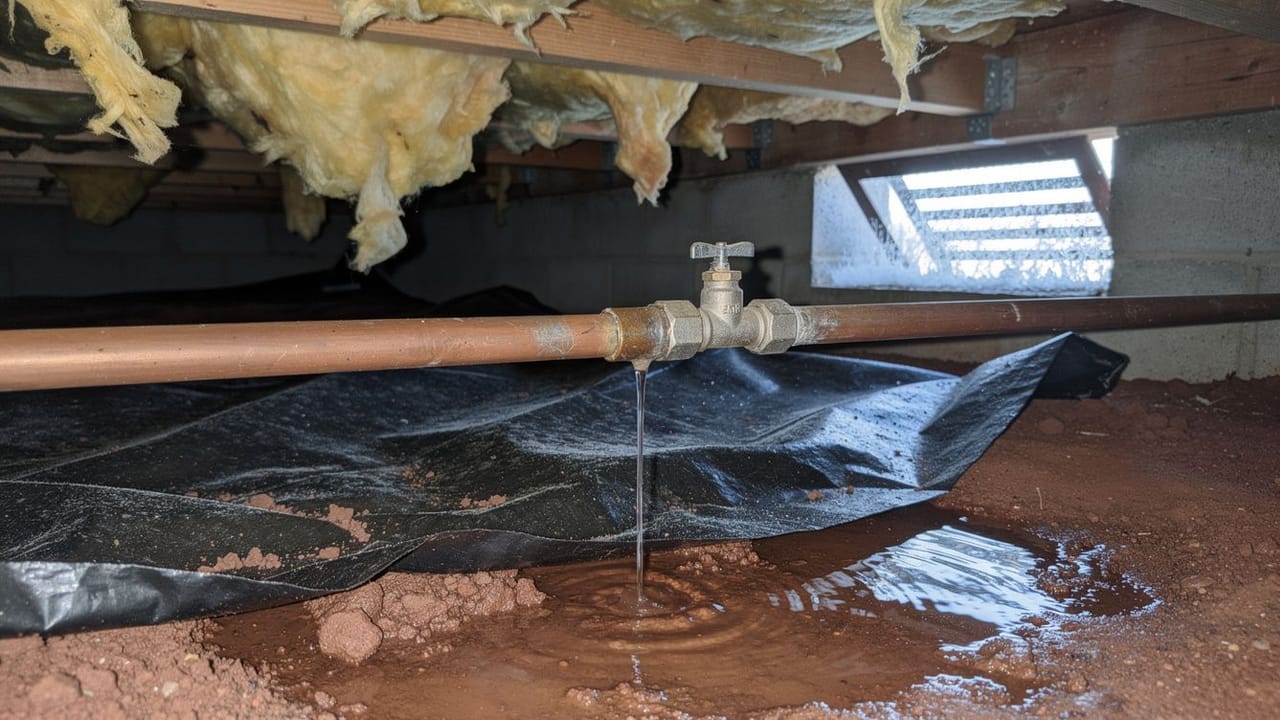
Metro lists the usual places: the basement, under the kitchen sink, a utility closet, near the water heater, or in the crawl space. A lot of houses around Nashville sit on crawl spaces, and in those the valve can be a few feet from the pipe that is spraying, which means going under the house in the cold with a flashlight. If there is a basement or a utility closet, look there before you crawl.
Metro also says to test the valve once you find it. A valve that has not been turned in years can be stiff, or turn and still let water through. If it will not close, or you cannot find one at all, their advice is to call a plumber. The better time to learn all of this is a mild afternoon in the fall, with dry socks on.
Why the city is not the call to make
Plenty of people call the water utility first. Metro Water Services is plain about it: it does not respond to private plumbing problems, and a burst pipe in your house is a job for a plumber. Its line, 615-862-4600, is for a suspected water main break, an outage or low pressure nobody can explain. That is Nashville and Davidson County; the utilities in the surrounding counties run their own way, so ask yours before you need to.
So the morning splits into two calls. A plumber repairs the line. We do not; we take the water out, find out how far it got and dry the structure behind it. Those two jobs can run side by side. With the valve closed, nothing is being added, and the clock on the wet framing and drywall is running whether the pipe is fixed yet or not.
When the water comes back on, check the rest of the house. Metro notes that a faucet giving only a trickle points to a frozen pipe, and that one frozen pipe can mean others. The lines it says freeze most are hose bibs, sprinkler lines and backflow preventers outside, and inside, supply pipes in basements, crawl spaces, attics, garages and kitchen cabinets, plus anything run along a poorly insulated exterior wall. Our winters bring hard freezes now and then rather than steady cold, so a lot of that pipe was never protected for a hard freeze.
Where the water went while the house was quiet
A burst line in a freeze often runs for hours before anyone sees it, because it lets go overnight or while the family is away. Water from a supply line starts out as tap water, and that is the good news. The bad news is how far it travels before it is found, and the route depends on where the pipe was.
From an attic run, it soaks the insulation, then comes through the ceiling drywall at a seam or a light fixture. In an exterior wall, it runs down inside the cavity, wetting the insulation against the studs and pooling on the bottom plate, and the drywall wicks it upward from there. Under the house, it wets the floor framing and the subfloor from below and sits on the vapor barrier, which is its own job, covered in our post on water in the crawl space. Through any of these, carpet pad carries it under the wall into the next room.
That is why the puddle on the floor is the smallest part of what we find. On the first visit, extraction pulls the standing water out of the carpet and off the floor, and the meters go along the walls and across the floors to find the wet edge you cannot see. Before any of that, and before you move anything, take photos: the split pipe, the water, the rooms. Our notes on making a water damage claim go smoothly explain why the adjuster will want them.
The 24 to 48 hours that decide the rest
The EPA’s brief guide to mold, moisture and your home gives the number that drives a burst-pipe job: if wet or damp materials are dried within 24 to 48 hours of a leak, in most cases mold will not grow. The CDC’s guidance on drying out wet items puts the same window on everything water reaches in a home: clean and dry it, or remove it, within 24 to 48 hours. The EPA’s winter page adds the obvious order of work: fix the leak promptly, then dry everything completely.
That window is why getting the water off the floor is not the end of the job. Removal takes hours. Getting the studs, the subfloor and the inside of the wall back to dry is structural drying: air movers across the wet surfaces, dehumidifiers pulling the moisture out of the air, and readings at the same spots every day until they match a dry part of the house. Even in winter, Middle Tennessee air holds enough moisture to slow that down, so the house stays closed and the dehumidifiers do the work.
Some things cannot be dried in time and are not worth trying. The EPA notes that porous materials such as ceiling tiles and carpet may have to be thrown away if they become moldy, and soaked insulation in a wall or an attic holds water against the wood long after the surface feels dry. We cut that out early, so the drying gear is working on wood and drywall rather than on a sponge.
After we leave, the same guide gives you one number to watch: keep indoor humidity below 60 percent, ideally between 30 and 50, and it notes that an inexpensive meter will tell you where you stand. If a pipe has let go in your house in Nashville or anywhere in Davidson County, close the valve, call a plumber for the line, and ask us for a free estimate on the water.
Sources
- Metro Water Services, Metro Nashville: Metro Water Services Urges Residential and Commercial Property Owners to Prepare Plumbing for Extreme Cold (Jan. 22, 2026) — Where the shutoff valve usually is and testing it; shut off at the valve if a pipe bursts; Metro does not respond to private plumbing problems; which pipes freeze most; how to thaw safely.
- U.S. EPA, Winter Weather and Indoor Air Quality — Shut off the water if a pipe bursts; fix the leak promptly and dry wet walls and flooring completely; thaw with warm air, not a torch.
- U.S. EPA, A Brief Guide to Mold, Moisture and Your Home — Materials dried within 24 to 48 hours of a leak usually will not grow mold; indoor humidity below 60 percent, ideally 30 to 50; porous materials may have to be thrown away if moldy.
- CDC, Dry Off Wet Items After a Storm — Clean and dry or remove wet items within 24 to 48 hours to prevent mold.