
· by Michael Blair, Nashville's Water Damage
In a great many two-story homes built across Williamson, Rutherford and Wilson counties over the last few decades, the air handler for the upstairs sits in the attic, right over a bedroom or a hallway. Through a Tennessee summer its cooling coil pulls a surprising amount of water out of the air, and all of it has to leave through a small plastic drain line. By late September that line has had months to build up slime, and the ceiling stain that appears now is often the end of a leak that started weeks ago.
Where the water comes from
As humid house air passes over the cold coil, moisture condenses on it and drips into a pan built into the unit. The primary drain carries that water through PVC pipe to the outside or into a plumbing drain. Under the whole unit there is supposed to be a second, separate pan, with either its own drain line or a float switch that shuts the system off when water rises in it.
The usual failure is a primary line clogged with algae and sludge. Water backs up, spills into the secondary pan, and if that pan is rusted through, its line is blocked, or there is no float switch, it goes onto the attic floor and into the ceiling below. Older units in hot attics also rust through the primary pan itself.
- A pipe dripping over a window or at the eave: the backup drain is working, and the main one is clogged
- Air conditioning that has stopped with the thermostat still calling for cool: often a float switch that tripped
- A yellow or brown ring on the ceiling below the unit
- Drywall that feels soft or is starting to sag
What the leak reaches
The ceiling drywall is only the visible part. Above it sits attic insulation, blown fiberglass or cellulose in most of these houses, and wet insulation packs down, stops insulating, and holds water against the back of the drywall for a long time. Cellulose in particular stays wet and heavy. The ceiling joists and the attic decking under the unit take water too.
If the ceiling is bulging, keep people out from under it. Drywall holding water can let go all at once, and if the wet area is near a light fixture or a smoke detector, switch off that circuit at the breaker. Then shut the system off and get the drain cleared before you run it again.
Drying it properly
A small, recent stain on a firm ceiling may dry in place once the wet insulation above it is pulled back and air is moved across the attic side. Drywall that has sagged, stayed wet for days or gone soft generally comes out, because it rarely regains its strength and it hides growth on the paper facing. Wet insulation is almost always removed and replaced rather than dried.
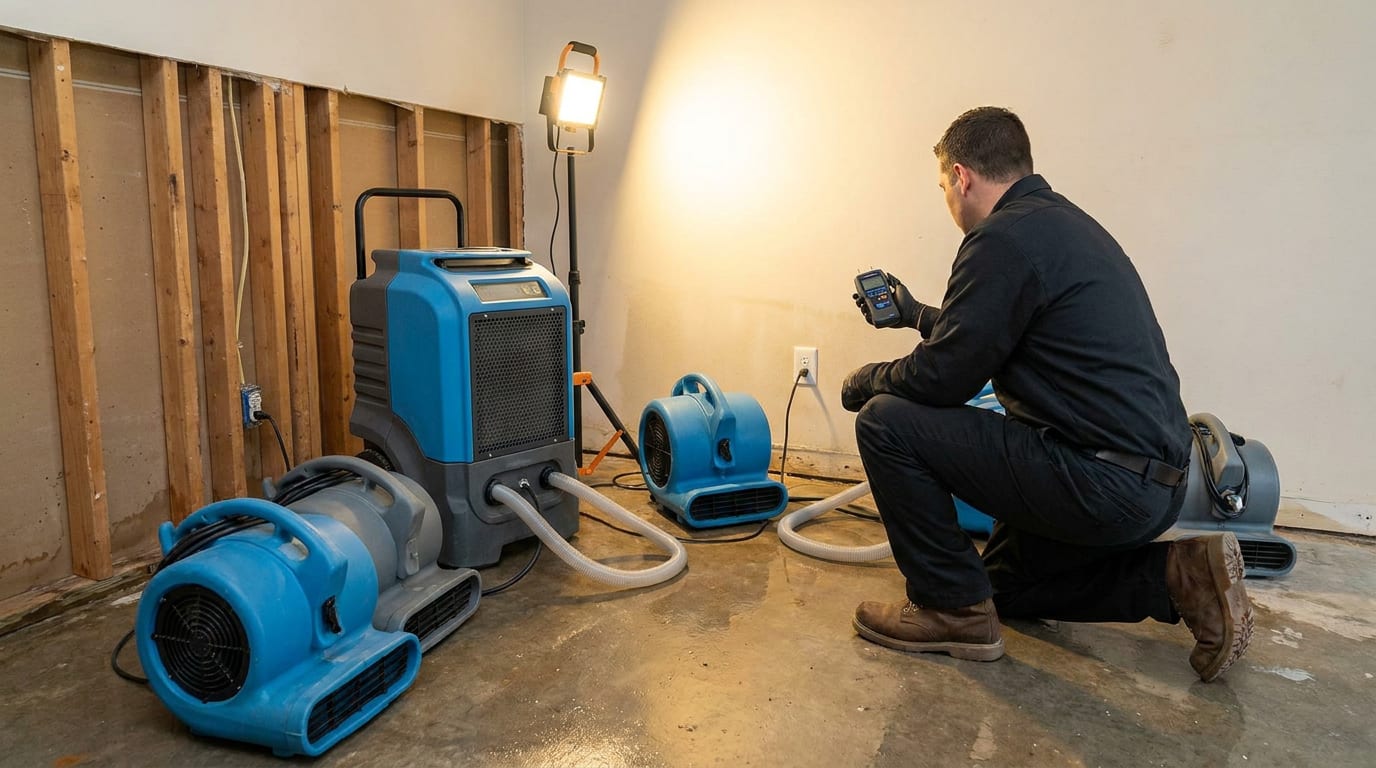
Framing gets checked with a moisture meter and dried until it reads normal, which in a summer attic can take real equipment. Painting over a stain before that point only hides it, and a stain-blocking primer on a wet ceiling will bleed through or peel.
Why it matters into the winter
It is easy to think the risk ends with the cooling season. It does not if the upstairs is heated by a high-efficiency condensing furnace, because those produce condensate in heating mode too, and it often runs out the same drain. A line that clogged in August can overflow again in January.
Most insurers treat a sudden overflow that damages the ceiling differently from a slow leak that went on for weeks, and the drain cleaning itself counts as maintenance. The declarations page and the water damage section of your policy say where your insurer draws that line. What prevents the next one is simple: have the drain flushed as part of the yearly HVAC service, make sure there is a float switch, and look at the secondary pan whenever you are in the attic.