
· by Michael Blair, Nashville's Water Damage
After a supply line lets go or a water heater leaks, the first question most owners ask us is whether the walls have to come out. Sometimes they do and sometimes they do not, and the difference is not how bad the wall looks on day one. It comes down to three things: what the drywall itself is doing, what kind of water it soaked up, and what sits behind it in the wall. Here is how the federal and extension guidance draws those lines, and how we apply them on structural drying jobs around Franklin and the rest of Middle Tennessee.
Can wet drywall be dried out instead of replaced?
Wet drywall can often be dried out instead of replaced, as long as it passes a simple test. The EPA’s Table 1 on water damage cleanup and mold prevention, from its guide to mold remediation in schools and commercial buildings, says wallboard may be dried in place when the board shows no obvious swelling and its seams are still intact. If either fails, it says to remove, discard and replace the board. It also says to ventilate the wall cavity where possible.
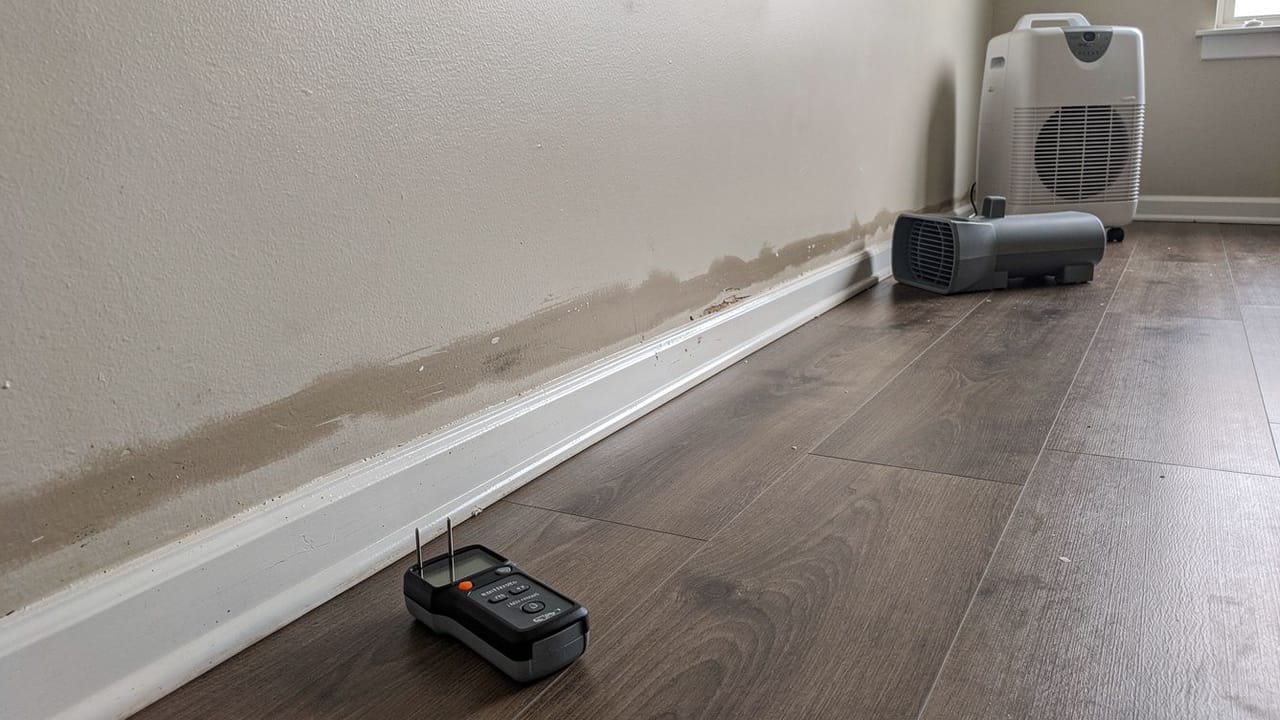
In practice the test is visible and quick. Swelling shows as a soft, puffy band at the bottom of the wall or a bulge in the face of the board. Seams that have let go show as a tape joint lifting or cracking along its length. A wall that is wet but still flat and tight is a candidate for drying, and the moisture meter, not the calendar, tells us when it is done.
When does wet drywall have to come out no matter what?
Wet drywall has to come out when the water was contaminated or the board was submerged. The EPA table is written for clean water handled within 24 to 48 hours. It notes that sewage or other contaminated water calls for protective equipment and containment under OSHA, and warns against running fans until the water is known to be clean. Our post on clean, gray and black water explains how we sort a loss into those groups.
Floodwater is the clearest case. Mississippi State University Extension’s guide to cleaning up walls after a disaster says drywall that has been submerged must be replaced, and it tells owners to remove the board from the floor up to the visible high-water line. It adds that bowing or warping above that line can be expected, because the board swells as it wicks water upward.
What is behind the drywall that changes the answer?
The insulation behind the drywall often changes the answer, because a wet wall cavity cannot dry through a closed face. The EPA table lists wet fiberglass and cellulose insulation as materials to discard and replace, so an exterior wall that took on water usually needs the board opened to get the insulation out. The Mississippi State guide gives the reason: soaked insulation stops air from moving near the wall and keeps the wood framing from drying.
Interior walls are different. Most have no insulation, which is why the EPA’s advice to ventilate the cavity is often enough there; we remove the baseboard and drill small holes behind where it sat so air reaches inside. Mississippi State also notes that rigid foam insulation can stay when it is not in direct contact with the framing or sheathing, and that older balloon-framed walls may need the board opened higher, above any fire blocking at or below the waterline.
How long does it take for wet drywall to dry?
Wet drywall takes as long as the readings say, which can be days for a clean leak caught early and much longer for a flooded wall. The Mississippi State guide says total drying time depends on airflow, humidity and temperature, and for walls that were flooded it allows at least four to six weeks before repainting or re-covering. The EPA table adds a caution that runs the other way: even materials dried within 48 hours may have grown mold, and growth does not always follow that window either.
That is why we meter the board and the framing behind it every day and leave the equipment in place until both read dry, and why we do not paint over a stain until the wall behind it is confirmed dry. When the drywall does have to come out, the repairs and reconstruction follow once the framing passes, and our post on water damage repair after the drying covers what Metro Codes asks for before new board goes up. To have a wet wall tested, ask us for an estimate.
Sources
- U.S. EPA, Table 1: Water Damage – Cleanup and Mold Prevention (Mold Remediation in Schools and Commercial Buildings) — Wallboard may be dried in place if no obvious swelling and seams intact, otherwise remove and replace; ventilate the wall cavity; fiberglass and cellulose insulation discard and replace; clean water within 24–48 hours; contaminated water needs PPE and containment; mold may grow even within 48 hours
- Mississippi State University Extension, Disaster Relief: Home Cleanup and Renovation for Walls (P3837) — Submerged drywall must be replaced; remove board to the high-water line; swelling above the line expected; fire stops in balloon framing; wet insulation removed, foam may stay; drying time depends on airflow, humidity and temperature; at least 4–6 weeks for flooded walls
FAQ
Does Wet Drywall Need to Be Replaced After a Leak? — questions
If drywall gets wet, is it ruined?
Not necessarily. The EPA’s cleanup guidance says drywall may be dried in place if it shows no obvious swelling and its seams are intact, with the wall cavity ventilated where possible. That applies to clean water dealt with quickly. Board that swelled, lost its seams, was submerged or soaked up sewage has to be replaced.
How high should drywall be cut after a flood?
Mississippi State University Extension says to remove the board from the floor up to the visible high-water line, and notes that bowing above that line is expected because drywall wicks water upward. In older balloon-framed walls, it says to open 6 to 12 inches above any fire blocking that sits at or below the waterline.
Does wet insulation in the wall have to be replaced?
Usually, yes. The EPA’s Table 1 lists wet fiberglass and cellulose insulation as materials to discard and replace, and Mississippi State Extension says soaked insulation blocks airflow and keeps the framing from drying. Rigid foam can stay if it does not touch the framing or sheathing.
Can you paint over drywall that got wet?
Only once the board and the framing behind it read dry on a meter, and only if the board passed the swelling and seam test. Mississippi State Extension allows at least four to six weeks for flooded walls to dry before repainting. Paint over a damp wall seals the moisture in and hides any growth starting behind it.