
· by Michael Blair, Nashville's Water Damage
When water reaches the outlets, most people’s first question is whether they can switch the breakers back on once things dry out. Older flood guidance often said yes, after cleaning and a few days of drying. The manufacturers who make the equipment now say something different for anything that has actually been under water. Here is what their guide says to replace, what an extension service still tells people about turning the power back on safely, and how that work fits into structural drying and the rebuild in a house in Nashville.
Can outlets and switches be dried out and reused after a flood?
Outlets and switches that were under water should not be dried out and reused, according to the National Electrical Manufacturers Association. Its guide Evaluating Water-Damaged Electrical Equipment (NEMA GD 1-2019), the copy published by New Jersey’s Department of Community Affairs, lists wiring devices, meaning switches, receptacles and dimmers, as equipment to replace. It puts GFCIs, AFCIs and surge protective devices on the same list and says owners should not try to air dry or wash them.
The reason is what water leaves behind. NEMA explains that sediment and contaminants can work their way into a device and stay there after it has dried or been rinsed, affecting how it performs in ways that are not visible. GFCIs and AFCIs also contain electronic circuitry that water can disable, which can leave a device that looks fine but no longer protects anyone. NEMA’s guide covers flooding, firefighting water and other events involving large amounts of water, which is the situation in a flooded basement or a room where a supply line ran for hours.
Does the wiring in the walls have to be replaced?
Wiring in the walls usually has to be replaced if it was submerged, because most house wiring is rated for dry locations only. NEMA’s table names cable listed for dry locations, such as NM-B, the plastic-sheathed cable used in most homes, as a replace item, and warns that dry-location wire can become a shock hazard when it is energized after being wet. Wire rated for wet locations may be reconditioned, but only when its ends stayed dry and it is undamaged.
The same table lists outlet and junction boxes, molded-case circuit breakers, fuses and lighting equipment for replacement. NEMA notes that most ballasts and LED drivers inside light fixtures carry only damp- and dry-location ratings. It treats a panelboard as something that may be reconditioned, but only with the manufacturer’s guidance. Signaling, protection and communication systems are on the replace list too, and NEMA points out that some of them are life safety systems.
When is it safe to turn the power back on after water gets in?
Power can go back on once qualified people have evaluated and dealt with the wet parts of the system, and not before. NEMA warns that putting power back on equipment that has been in water, without a proper evaluation first, can be extremely dangerous. Alabama Cooperative Extension’s Restoring Electrical Service adds the practical steps for the first hours: shut the electricity off at the meter and in the building before going in, treat the main entrance box as the most dangerous part, assume a line is live even when a test says otherwise, and get the water out before anyone works on the system.
That extension page also describes cleaning and drying outlets and testing circuits one at a time, which is older advice than NEMA’s list. Where the two differ, we follow the manufacturers. The extension page and NEMA agree on the main point: an electrician checks the system before it is relied on again, and a GFCI breaker that took on water will probably need replacing.
How this fits into drying and the rebuild
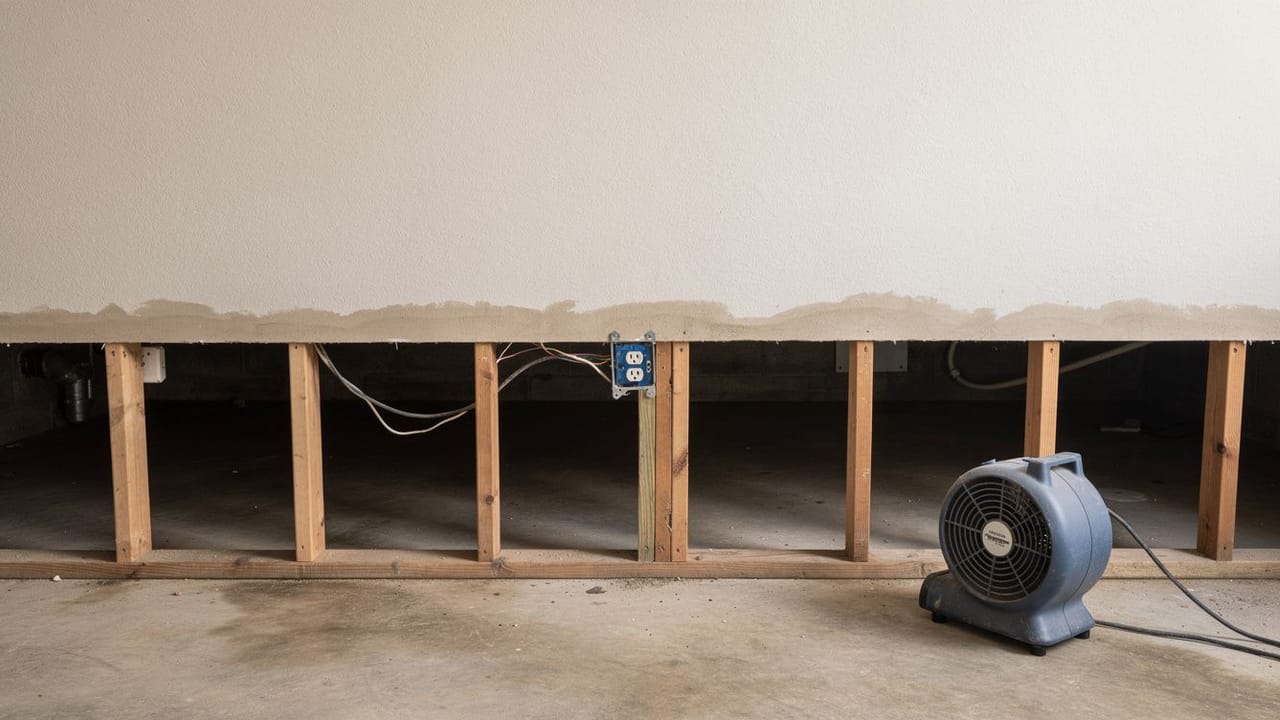
On a water loss, the moisture map we draw for water extraction and drying also marks how high the water stood and which boxes sat below that line. Circuits feeding those areas stay off. A wall wetted from above by a leaking pipe is a different case from a wall that stood in water, and the evaluation decides which devices and runs of cable go.
Because drywall around wet outlets is often cut out anyway, that is the easiest time for an electrician to replace devices, boxes and cable before the wall is closed again during repairs and reconstruction. Photograph every outlet, switch and fixture below the water line before it is removed, since that record helps an insurance adjuster see what was replaced and why. For basements, our post on pumping out a flooded basement covers getting the water out safely first. If water has reached your outlets, ask us for an estimate.
Sources
- National Electrical Manufacturers Association, Evaluating Water-Damaged Electrical Equipment (NEMA GD 1-2019), via New Jersey Department of Community Affairs — Replace wiring devices, GFCIs, AFCIs, surge devices, molded-case breakers, fuses, dry-location cable such as NM-B, outlet boxes and lighting equipment; do not air dry or wash devices; hazards of re-energizing without evaluation; evaluation by qualified personnel
- Alabama Cooperative Extension System, Restoring Electrical Service — Shut off power at the meter and in the building; treat the main entrance box as most hazardous; pump out water first; electrician checks for short circuits; GFCI breakers will probably need replacing
FAQ
Outlets and Wiring After Water Damage: What Goes — questions
Should a GFCI outlet be replaced after it has been in water?
Yes. NEMA’s guide on water-damaged equipment lists ground-fault and arc-fault circuit interrupters as items to replace and says not to air dry or wash them. They contain electronic circuitry that water can disable, so a GFCI can look and reset normally and still fail to trip when it should.
Do circuit breakers need replacing after a basement flood?
Breakers that were under water do. NEMA’s table lists molded-case circuit breakers and low-voltage fuses for replacement, because water and the particles it carries can affect how they work. A panelboard may be reconditioned in some cases, but NEMA says that takes the manufacturer’s specific guidance and a qualified evaluator.
Can NM-B cable stay in the wall after it was underwater?
Generally no. NEMA’s guide lists wire and cable rated for dry locations only, naming NM-B, as equipment to replace after water exposure, and warns it can become a shock hazard when energized. Wire rated for wet locations may be reused only if its ends stayed dry and it shows no damage.
Who should inspect the electrical system after a water leak or flood?
A qualified electrician. NEMA says evaluation of water-damaged electrical equipment should be done by qualified personnel, and Alabama Cooperative Extension says the system should be checked for short circuits by an electrician before power is restored. Until then, keep the circuits to wet areas off and stay out of standing water.