
· by Michael Blair, Nashville's Water Damage
After a storm in Middle Tennessee, the first call is often about water in the house, and the second is about whether insurance will pay for getting it out. A policy from the National Flood Insurance Program answers that in its own terms. It has a narrow definition of what a flood is, a list of what it pays for during cleanup, things it leaves out, and duties the owner has to meet on a deadline. Here is how the NFIP’s coverage summary and the policy itself read, so you can document the loss correctly before our water extraction crew starts pulling carpet. Your own policy governs; this explains how to read it.
What counts as a flood for insurance?
For a flood policy, a flood is a general, temporary covering of normally dry land, two or more acres of it or two or more properties with one of them yours. FEMA’s NFIP Summary of Coverage lists the causes that count: overflowing inland or tidal water, an unusual and rapid buildup or runoff of surface water from any source, mudflow, and collapse of land along a lake or similar shore.
Water that never covered the ground outside does not fit that definition. A burst supply line, a failed water heater or an overflowing tub is a loss inside the house, not a flood. The summary also points to the policy’s exclusions for water moving beneath the ground, seepage, and drain or sewer backup. How a standard homeowners policy treats backup is in our post on sewer backup coverage; the rest of this post is about the flood policy itself.
Does flood insurance pay for cleanup and debris removal?
Flood insurance building coverage includes debris removal, along with the building and many of the parts cleanup touches. The FEMA summary lists the building and its foundation, electrical systems, central air conditioning, furnaces and water heaters, refrigerators, stoves and other built-in appliances, and permanently installed paneling, wallboard, bookcases and cabinets. Carpet is covered when it is permanently installed over an unfinished floor. Washers, dryers, freezers and the food in them fall under contents coverage, which is bought separately.
The policy’s own wording, in the Standard Flood Insurance Policy dwelling form%20to%20Part%2061), pays to remove debris of the insured property wherever it ends up and debris from elsewhere that lands on or in the insured property. If you do that work yourself, it values your labor at the federal minimum wage, and debris removal does not raise the policy limit.
What does a flood policy leave out?
A flood policy leaves out several things owners expect it to cover, and basements are the first. The FEMA summary says coverage in a basement is limited and sends owners to their own policy for the list of what is covered down there. A finished lower level with carpet, drywall and furniture may come out of a flood with much of that outside the policy.
The summary also lists damage from moisture, mildew or mold that the owner could have avoided, additional living expenses such as temporary housing, and property outside the building, including trees, plants, walks, decks, patios, fences, hot tubs and pools. The mold line is the one that turns on speed. Getting standing water out and the structure dried is the owner’s job to start, which is why our structural drying work begins as soon as the water is out, and why the first 24 hours after water damage matter as much as they do.
What does the flood policy ask of you after the water goes down?
The flood policy asks for prompt written notice, a separation and inventory of the damage, and a signed proof of loss within 60 days. The policy’s requirements in case of loss say to keep damaged and undamaged property apart, prepare an inventory with bills, receipts and related documents attached, and send a proof of loss, a statement of the amount claimed that you sign and swear to, within 60 days of the loss. It has to go in on time even if the adjuster never gives you the form.
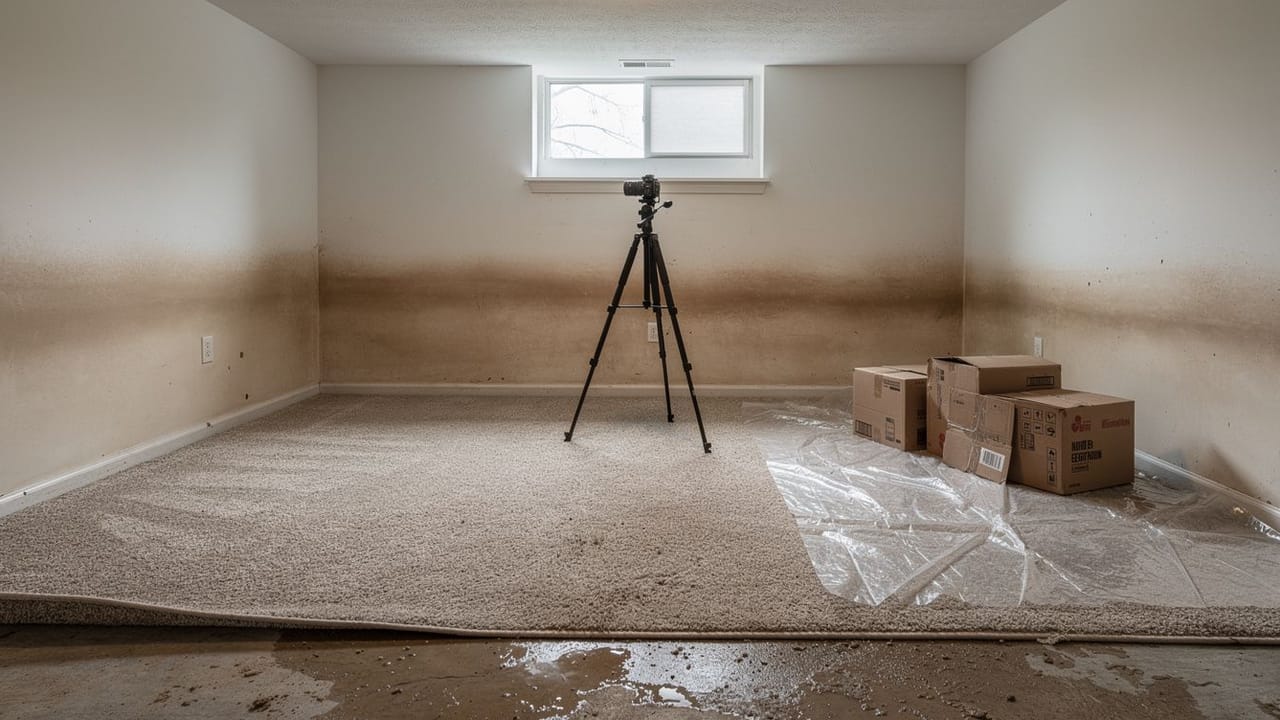
The FEMA summary adds practical steps: report the loss right away, ask about an advance payment, and photograph or video damaged property before it leaves the house. We photograph every room and every pile before we haul anything, and keep moisture readings, which is part of our insurance coordination. We work flood cleanups in Franklin, Brentwood, Nashville and the towns between; if water is in your house now, ask us for a free estimate.
Sources
- FEMA, National Flood Insurance Program Summary of Coverage (P-2144, December 2023) — Definition of a flood; building coverage including debris removal, wallboard, cabinets, furnaces and water heaters; contents bought separately; limited basement coverage; not covered: avoidable mold, temporary housing, property outside the building, underground water, seepage and sewer backup; report promptly, advance payment, photograph before removal.
- Standard Flood Insurance Policy, Dwelling Form, 44 CFR Part 61, Appendix A(1) (eCFR) — Debris removal terms and owner labor at the federal minimum wage; requirements in case of loss: prompt written notice, separate damaged property, inventory with receipts, signed and sworn proof of loss within 60 days even without the adjuster’s form.
FAQ
Flood Insurance and Cleanup: What the NFIP Pays For — questions
Is flood damage the same as water damage for insurance?
No. A flood policy defines a flood as surface water covering two or more acres or two or more properties, from overflowing water, rapid runoff, mudflow or shoreline collapse. Water from a burst pipe or appliance inside the house is a different kind of loss, and the flood policy excludes seepage and sewer backup.
Does flood insurance cover a burst pipe?
Not as a flood. The NFIP definition requires surface water covering normally dry land, at least two acres or two properties, one of them yours. A burst pipe is a loss inside the house, so look to how your homeowners policy treats sudden water damage, and read its terms rather than assuming either way.
What does flood insurance cover in a basement?
Less than in the rest of the house. FEMA’s NFIP coverage summary says basement coverage is limited and refers owners to their policy for the list of items covered there. Finished floors, walls and furniture in a lower level may fall outside it, so read that list before cleanup and photograph everything first.
How long do you have to file a flood insurance claim?
Report the loss promptly in writing, then send a signed and sworn proof of loss within 60 days, as the Standard Flood Insurance Policy requires. That deadline holds even if the adjuster never sends the form. Keep an inventory with receipts, and keep damaged and undamaged property apart until it has been documented.
Does flood insurance cover mold?
Not mold the owner could have avoided. FEMA’s coverage summary puts moisture, mildew or mold damage the owner could have prevented on its list of what is not covered. That makes drying the house quickly part of protecting the claim: get the water out, start drying and keep a record of when each step happened.
Does flood insurance pay for a hotel while the house is repaired?
No. FEMA’s NFIP summary lists additional living expenses such as temporary housing among the things a flood policy does not cover. If you carry other coverage, read what it says about living expenses before booking a long stay, and keep every receipt either way.