
· by Michael Blair, Nashville's Water Damage
Water damage becomes a much larger problem at roughly the 24 to 48 hour mark, when mold begins to establish. In Middle Tennessee humidity that window is at the shorter end, so what happens on day one matters more than anything after it.
What do you do first when water gets into the house?
Find the source and shut it off — the main water shut-off if it is plumbing. If water is near electrical outlets or the panel, kill the power at the breaker before entering.
Standing water from a sewer backup or a river flood is contaminated and needs different handling from a burst supply line. Do not treat them the same.
Document before you clear
Photograph and video everything before moving anything, including the source, the standing water and the affected contents. Insurers assess from evidence.
Keep damaged items until an adjuster has seen them or authorized disposal, and keep receipts for anything you spend on mitigation.
- Shut off the water at the source
- Kill power to affected areas if water is near electrics
- Photograph and video before moving anything
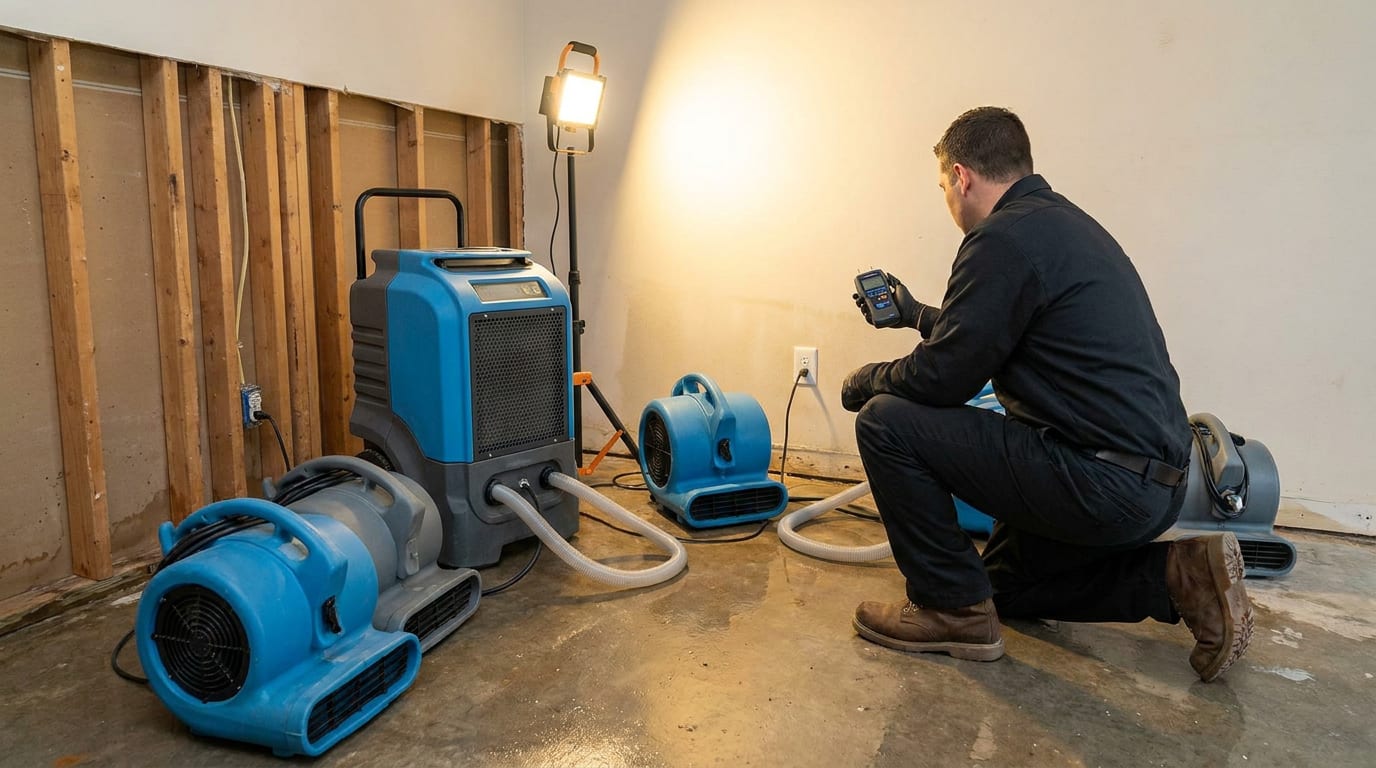
- Extract standing water and start air movement
- Call your insurer and a restoration firm the same day
Get water out and air moving
Extraction first, then air movement and dehumidification. In Middle Tennessee, opening windows in summer usually makes it worse — outdoor air is often more humid than indoor.
Lift what you can off wet carpet, remove wet rugs, and get air circulating under and behind things rather than just across the room.
What has to be torn out after water damage?
Wet carpet padding almost never dries in place and is usually removed. Drywall wicks water upward, so it is commonly cut back above the visible line.
Insulation in a wet wall cavity holds water and must come out, whatever the surface looks like.
FAQ
The First 24 Hours After Water Damage — questions
How quickly does mold grow after water damage?
It can begin establishing within roughly 24 to 48 hours in warm humid conditions, and Middle Tennessee summers are at the fast end of that. That window is why professional drying starts immediately rather than after an adjuster visit — insurers expect prompt mitigation.
Should I open windows to dry out a wet house?
Usually not here in summer, when outdoor air is often more humid than indoor and you would be adding moisture. Closed-up drying with dehumidifiers and air movers is the standard approach. In dry cool weather, ventilation can help.
Does insurance cover water damage?
Sudden and accidental discharge, such as a burst pipe, is generally covered by a standard policy. Gradual leaks that went unaddressed, and surface flooding from outside, generally are not — flooding needs separate flood coverage. Sewer backup is often an endorsement rather than standard.
Does wet drywall need to be replaced?
Often, at least in part. Drywall wicks water upward, so it is commonly cut back above the visible wet line, and the insulation in a wet wall cavity has to come out no matter how the surface looks. Day one matters, because mold can begin to establish within roughly 24 to 48 hours.