
· by Michael Blair, Nashville's Water Damage
A water loss is two jobs. The first is restoration: get the water out, dry the structure, and take away what cannot be saved. The second is repair, putting back the drywall, insulation, flooring and trim so the room is a room again. People search for “water damage repairs” when they are somewhere between the two, often with fans still running and an adjuster asking for a rebuild estimate. Here is where one job hands off to the other, what Davidson County asks for before the walls close, and who is allowed to do the work. The drying side is our structural drying service; the rebuild is our reconstruction work.
Is water damage repair the same as restoration?
No. Restoration stops the damage, and repair rebuilds what the water took. Restoration runs from the first extraction through the drying, and its deadline is short: the EPA’s brief guide to mold, moisture and your home says that if wet materials are dried within 24 to 48 hours of a leak, in most cases mold will not grow. The EPA’s page on mold cleanup in the home adds that porous materials such as ceiling tiles and carpet may have to be thrown away once they turn moldy, which is why some of the tear-out happens during restoration rather than after it.
Repair starts when our moisture readings show the framing and subfloor are dry, not when the surface looks dry. Close a wall over wet studs and the problem moves inside the wall. What happens in those first hours is in our post on the first 24 hours after water damage, and which floors come back and which do not is in our post on wet floors.
Does Nashville require a permit to rebuild after water damage?
For a home damaged by weather, yes, once the rebuild starts. Metro Nashville’s Department of Codes and Building Safety put it in writing in How to Obtain Permits Associated with the Repair of Weather Damaged Homes, a handout dated March 2021 and written with flood-damaged homes in mind. It says ordinary maintenance needs no permit, but the repair of a weather-damaged home is not ordinary and needs a building permit before repairs begin.
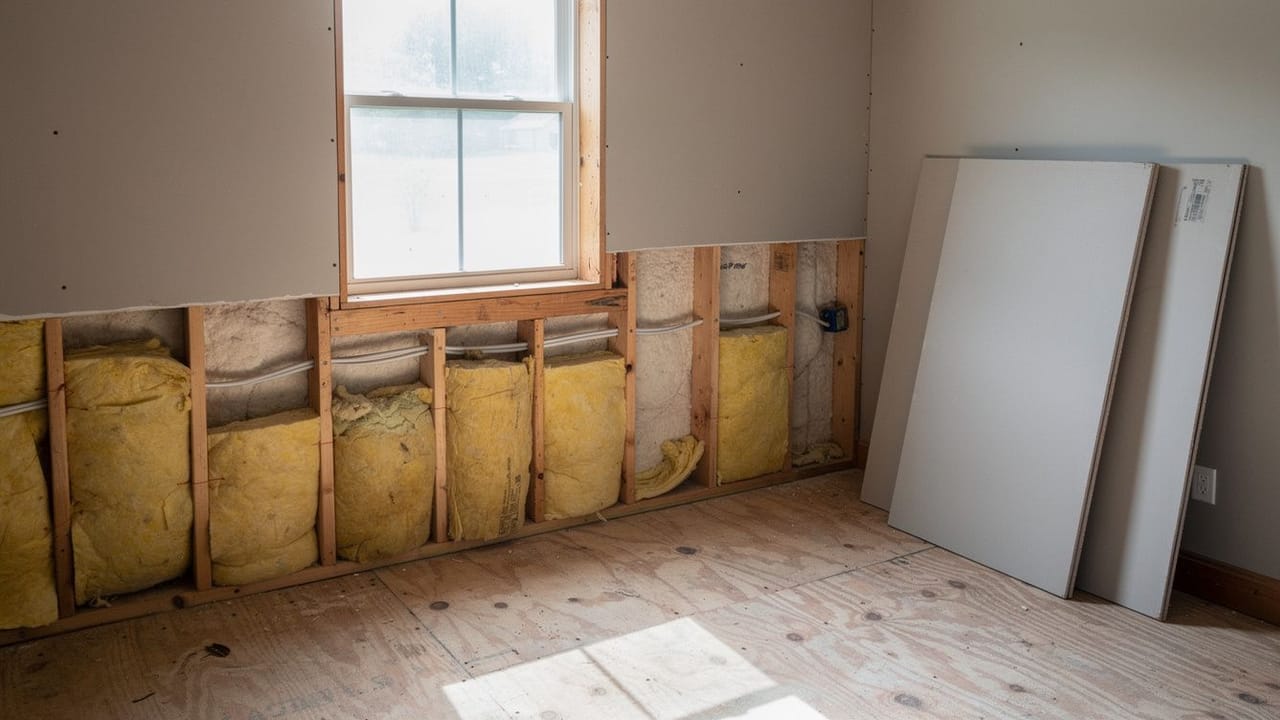
The handout draws the line where restoration ends. Demolition and clean-up, such as removing drywall, damaged carpet and doors, need no permit. A building permit is required before drywall goes back in and before any damaged electrical, plumbing or HVAC system is repaired. It also notes that proof of permits and inspections may be asked for in an insurance claim or when the house is sold, which matters to anyone working through a water damage insurance claim.
That handout speaks to weather-damaged homes. For a loss from a burst pipe or a failed appliance, we confirm the permit question with Metro Codes for that job before the rebuild is scheduled, rather than assume the flood guidance covers it.
The order of work before the walls close
Metro Codes’ handout sets out a sequence for damaged homes, and the order matters because each step is inspected before the next one hides it.
- With the building permit in hand, a licensed electrical contractor and a licensed HVAC contractor inspect the equipment the water reached.
- Those contractors pull their own electrical and HVAC permits, make the repairs and call Codes for inspection. No drywall goes up and nothing covers those systems until that is done.
- Insulation goes into the exterior walls and floors to meet the adopted energy code; the handout gives R-13 for walls and R-19 for floors.
- Before any drywall is hung, a framing inspection is requested from the Codes Department’s building inspection division. Once it is approved, the drywall and the rest of the finish work can go in.
- At the end, the project should hold final approvals for every phase involved, building, mechanical, plumbing and electrical among them.
Who is licensed to do the rebuild after water damage?
In Davidson County, either the owner who lives in the single-family home or a licensed contractor may pull the building permit, according to the same Metro Codes handout. It is blunt about the difference. When a contractor pulls the permit, the contractor answers for the work meeting code, subcontractors included. When an owner pulls it, the owner becomes responsible for code compliance, even for work a hired contractor did, and the handout’s advice is to have the contractor you hire obtain the permit. That is how we run our rebuilds.
The state adds its own rule. The Tennessee Department of Commerce and Insurance page on the Home Improvement license says the license is required for residential remodeling projects from $3,000 to $24,999 in the counties that adopted the law. In Middle Tennessee that list includes Davidson, Rutherford and Robertson; Williamson, Wilson and Sumner are not on it. For a rebuild in Brentwood or elsewhere in Williamson County, we check that county’s own permit requirements before the work is priced, rather than carry Nashville’s rules across the line.
Once the drying is finished, send us the drying records and the adjuster’s scope, and we will write up the rebuild with the permits it needs in Nashville or wherever the house is.
Sources
- Metro Nashville Department of Codes and Building Safety, How to Obtain Permits Associated with the Repair of Weather Damaged Homes (March 2021) — Building permit required before repairs; no permit for demolition and clean-up; permit before drywall and before electrical, plumbing or HVAC repairs; owner-occupant or licensed contractor may pull it; owner responsible for code compliance if the owner pulls it; electrical and HVAC permits and inspections, then R-13 walls and R-19 floors, then a framing inspection before drywall; permits may be required in an insurance claim or sale.
- Tennessee Department of Commerce and Insurance, Board for Licensing Contractors, Home Improvement license — Required for residential remodeling projects from $3,000 to $24,999 in adopting counties: Bradley, Davidson, Hamilton, Haywood, Knox, Marion, Robertson, Rutherford and Shelby.
- U.S. Environmental Protection Agency, A Brief Guide to Mold, Moisture and Your Home — Wet or damp materials dried within 24 to 48 hours of a leak or spill will in most cases not grow mold.
- U.S. Environmental Protection Agency, Mold Cleanup in Your Home — Absorbent or porous materials such as ceiling tiles and carpet may have to be thrown away if they become moldy.
FAQ
Water Damage Repair After the Drying Is Done — questions
Can I tear out wet drywall without a permit?
In Davidson County, for a weather-damaged home, yes. Metro Codes’ March 2021 handout says demolition and clean-up, including removing drywall, damaged carpet and doors, needs no permit. The permit comes in before new drywall is installed and before any damaged electrical, plumbing or HVAC system is repaired.
When can drywall go back up after water damage?
Only after two things are true. The framing has to be dry, or the moisture is sealed inside the wall. And in Davidson County, Metro Codes’ guidance for weather-damaged homes requires the electrical and HVAC work to be permitted and inspected, insulation installed, and a framing inspection approved first.
Who does the repairs after the water damage is dried out?
A contractor who rebuilds, which may or may not be the company that dried the house. We do both, so the drying records and the rebuild scope stay together. Electrical and HVAC repairs go to licensed contractors in those trades, who pull their own permits under Metro Codes’ sequence for damaged homes.
Do I need a licensed contractor to repair water damage in Tennessee?
It depends on the county and the size of the job. The state requires a Home Improvement license for residential remodeling from $3,000 to $24,999 in the counties that adopted the law, which include Davidson, Rutherford and Robertson. In Davidson County, only an owner-occupant or a licensed contractor may pull the building permit.
Will my insurer ask for proof of permits?
It may. Metro Codes’ handout on repairing weather-damaged homes says evidence of permits and inspections may be required in an insurance claim or a property sale. Keeping the permit card and each inspection approval with the rest of the claim file saves a scramble later, especially if the house is sold.